
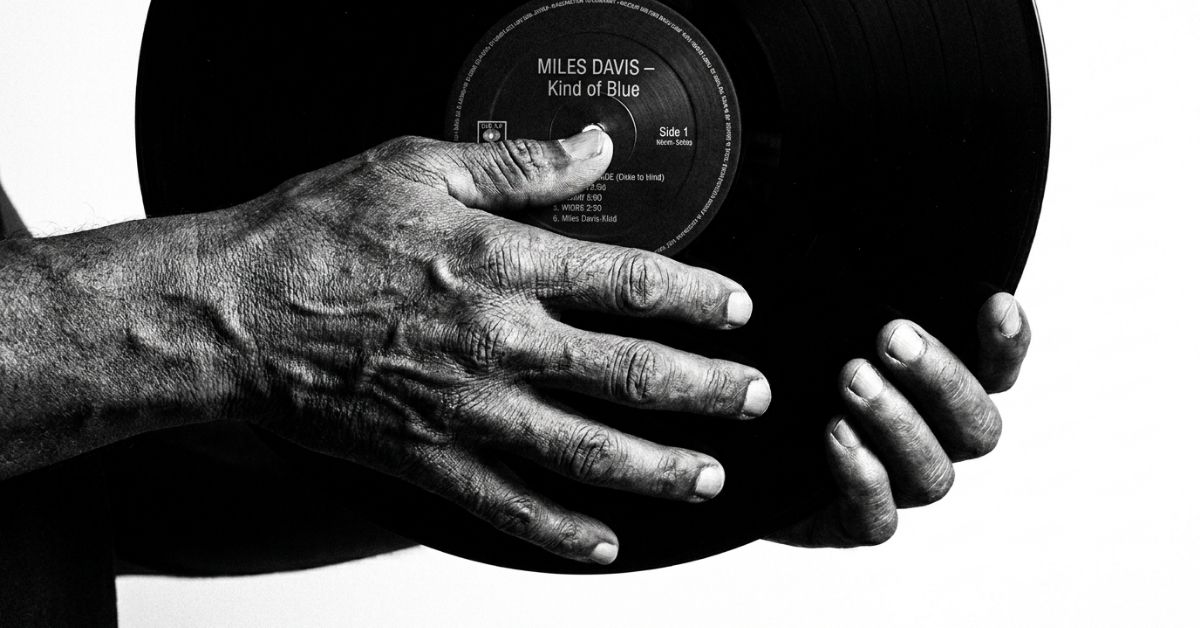
The font on your album cover does more work than you think. Before anyone hits play, before they read a single track title, the typography on your artwork is already telling them what kind of music they are about to hear.
Think about it: you can identify a metal record from across a room just from the lettering. A jazz album telegraphs sophistication through a single typeface. The Ramones’ logo is as iconic as any song they ever wrote. Typography is not decoration — it is communication. It tells your listener “this is for you” or “keep scrolling” in under a second.
If you are an independent musician releasing music in 2026, your album cover is your storefront. It lives as a tiny thumbnail on Spotify, a square on Apple Music, a post on Instagram. And the font you choose will either make that thumbnail memorable or forgettable.
This guide breaks down the best fonts for album covers right now, organized by style, with genre recommendations and practical sourcing info. No fluff — just what works and why.
Why Your Album Cover Font Matters
Typography is the fastest shortcut to genre signaling. A listener browsing new releases on any streaming platform is making split-second decisions based on cover art. The font is a huge part of that first impression.
Here is what the right font does for you:
- Establishes genre instantly. A blackletter font screams metal. A clean geometric sans-serif says electronic or pop. Your font tells people what to expect before they press play.
- Builds brand recognition. Think of how Drake’s OVO uses the same clean, minimal type across everything. Or how Iron Maiden’s Eddie font is burned into every metalhead’s brain. Consistency in typography builds artist identity over time.
- Conveys professionalism. A poorly chosen or overused free font (looking at you, Papyrus) signals that the music inside might be equally careless. Fair or not, listeners judge.
- Works at every size. Your cover needs to look good as a 300×300 pixel thumbnail AND as a 12-inch vinyl sleeve. Font choice directly determines whether your album title is legible at small sizes.
The artists and labels who understand this treat typography as a core part of their visual identity, not an afterthought. And that is exactly the approach we take in our music branding services — because the font is never just a font.
10 Best Fonts for Album Covers
Serif Fonts
1. EB Garamond
A beautifully refined serif with roots in the 16th-century Garamond typefaces. EB Garamond carries weight and elegance without feeling stuffy. It works particularly well for jazz, classical, singer-songwriter, and folk albums where you want to communicate depth and sophistication.
- Style: Classic, literary, warm
- Works for: Jazz, classical, folk, chamber pop, singer-songwriter
- Where to find it: Google Fonts (free)
- Real-world parallel: Think of the typography on ECM Records releases — that same restrained elegance.
2. Playfair Display
A high-contrast serif with dramatic thick-and-thin strokes. Playfair Display has a fashion-editorial quality that makes album titles feel like events. It is bold enough for covers while remaining sophisticated.
- Style: Dramatic, editorial, luxurious
- Works for: R&B, soul, art pop, neo-classical, ambient
- Where to find it: Google Fonts (free)
- Real-world parallel: Similar energy to the typography on Solange’s *A Seat at the Table* — high fashion meets music.
3. Cormorant Garamond
Lighter and more delicate than EB Garamond, Cormorant has an almost ethereal quality. It shines on album covers with lots of white space or atmospheric artwork. The display weights are particularly striking for album titles.
- Style: Ethereal, delicate, refined
- Works for: Ambient, dream pop, contemporary classical, folk
- Where to find it: Google Fonts (free)
Sans-Serif Fonts
4. Helvetica Neue
The king of clean. Helvetica Neue is the font behind some of the most iconic album covers in history — from the Beatles’ *White Album* era to countless modern releases. Its neutrality is its superpower: it lets the artwork do the talking while keeping the type razor-sharp.
- Style: Clean, neutral, authoritative
- Works for: Electronic, pop, hip-hop, experimental, any genre where the artwork dominates
- Where to find it: Pre-installed on macOS; available through Adobe Fonts. Alternative: Inter (Google Fonts, free) captures a similar energy.
- Real-world parallel: The 1975 have built their entire visual identity on Helvetica-style minimalism.
5. Montserrat
Inspired by the old signage of the Montserrat neighborhood in Buenos Aires, this geometric sans-serif has personality without being distracting. It is one of the most versatile fonts for independent musicians because it works across nearly every genre and looks clean at small sizes.
- Style: Modern, geometric, friendly
- Works for: Pop, indie, electronic, hip-hop, Latin
- Where to find it: Google Fonts (free)
6. Space Grotesk
A proportional sans-serif with a technical, slightly futuristic feel. Space Grotesk has gained serious traction in the last few years among electronic and experimental artists. It reads well at small sizes and has enough character to stand on its own.
- Style: Technical, futuristic, clean
- Works for: Electronic, techno, experimental, synthwave, IDM
- Where to find it: Google Fonts (free)
Display Fonts
7. Bebas Neue
A tall, condensed, all-caps sans-serif that was practically made for album covers. Bebas Neue commands attention. It is punchy, it fills space beautifully, and it has the boldness that rock, punk, and hip-hop covers demand.
- Style: Bold, condensed, impactful
- Works for: Rock, punk, hip-hop, alternative, pop-punk
- Where to find it: Google Fonts (free)
- Real-world parallel: Similar energy to the condensed type on Arctic Monkeys’ *AM* or early Strokes artwork.
8. Tusker Grotesk
A heavy display typeface with an industrial edge. Tusker Grotesk is what you reach for when you want your album title to hit like a wall of sound. Different weights range from elegant to brutalist, making it flexible within the display category.
- Style: Heavy, industrial, commanding
- Works for: Metal, post-punk, noise rock, industrial, darkwave
- Where to find it: Available from TypeType (paid, with free trial weights)
Handwritten & Script Fonts
9. Caveat
A casual handwriting font that avoids the trap most handwritten fonts fall into — it does not try too hard to look “authentic.” Caveat feels natural, slightly messy, and warm. It works on covers that want to feel personal and unpolished in a deliberate way.
- Style: Casual, warm, personal
- Works for: Folk, indie, acoustic, lo-fi, singer-songwriter
- Where to find it: Google Fonts (free)
10. Pinyon Script
An elegant formal script with beautiful flowing connections. Pinyon Script works when you need something ornate — think baroque, romantic, or theatrical. Use it sparingly. It is best for album titles, not body text or track listings.
- Style: Ornate, flowing, theatrical
- Works for: Classical, romantic, gothic, cabaret, art song
- Where to find it: Google Fonts (free)
- Real-world parallel: The ornamental scripts you see on classic Blue Note or Prestige Records reissues.
How to Choose the Right Font for Your Genre
Choosing the right font is not about personal preference — it is about speaking your audience’s visual language. Here is a genre-by-genre breakdown.
Rock / Metal
Go bold. Condensed sans-serifs (Bebas Neue), heavy display fonts (Tusker Grotesk), and custom blackletter styles dominate here. Metallica, Iron Maiden, and Black Sabbath all built brands around aggressive, instantly recognizable type. For modern rock and indie rock, slightly lighter options like Montserrat Bold or Space Grotesk can work when paired with strong imagery.
Jazz / Classical
Serifs reign supreme. EB Garamond, Cormorant Garamond, and Playfair Display all communicate the sophistication this audience expects. Look at Blue Note Records or Deutsche Grammophon for inspiration — clean, elegant, type-driven covers. Avoid anything too trendy. Timelessness is the goal.
Hip-Hop / R&B
This genre has the widest typographic range. Kanye West’s *Yeezus* used Helvetica. Kendrick Lamar’s *DAMN.* used a custom condensed sans-serif. Tyler, the Creator goes maximalist with custom display type. The common thread: intentionality. Whatever you choose, commit to it fully. Playfair Display, Helvetica Neue, and Bebas Neue all have strong hip-hop applications.
Electronic / EDM
Clean and geometric is the default. Space Grotesk, Montserrat, and Helvetica Neue dominate because electronic music’s visual identity tends toward the minimal and the technical. Think of labels like Kompakt, Warp, or Ninja Tune — the typography is always precise and restrained.
Pop
Pop is genre-fluid by design, so the font depends on the sub-flavor. Mainstream pop leans toward clean sans-serifs. Art pop can go dramatic with Playfair Display. Synth-pop loves Space Grotesk. The key is legibility and memorability — your font needs to work on a Spotify playlist thumbnail.
Indie / Folk
Handwritten fonts (Caveat), warm serifs (EB Garamond), and organic display faces feel at home here. The goal is authenticity. Bon Iver, Fleet Foxes, and Phoebe Bridgers all use typography that feels personal rather than corporate. Avoid anything too polished — a slight imperfection is a feature, not a bug.
Typography Tips for Album Cover Design
Readability Is Non-Negotiable
If people cannot read your album title at thumbnail size (roughly 300×300 pixels), your font choice has failed regardless of how beautiful it looks at full resolution. Always test your cover at the smallest size it will be displayed.
Contrast Makes or Breaks It
Your text needs to separate clearly from the background. White text on a dark photo is a classic for a reason. If your artwork is busy, consider adding a semi-transparent overlay or positioning the text on a clean area of the image. Never rely on a thin font over a complex background.
The Two-Font Rule
One font for the album title, one for the artist name (or vice versa). That is it. Two fonts maximum. Mixing three or more typefaces on a single album cover almost always looks amateurish. If you use two fonts, pair a serif with a sans-serif — the contrast creates visual hierarchy naturally.
Size Hierarchy Matters
Decide what is most important: the artist name or the album title. One should be significantly larger than the other. When both are the same size, neither commands attention and the cover feels flat. Most major-label releases lead with the artist name in larger type, but emerging artists sometimes lead with a strong album title to spark curiosity.
Kerning and Tracking
Letter spacing makes a bigger difference than most musicians realize. Tight tracking on a bold display font feels aggressive and immediate. Wide tracking on a sans-serif feels airy and modern (think Bon Iver’s *22, A Million* aesthetic). Spend five minutes adjusting the spacing — it elevates the entire design.
Common Font Mistakes Musicians Make
Using overexposed fonts without modification. Lobster, Papyrus, Brush Script, and Impact have been so overused that they carry zero distinctiveness. If you must use a popular font, customize it — adjust the weight, modify the kerning, or pair it in an unexpected way.
Choosing style over legibility. That ornate script font might look stunning on your desktop, but if it becomes an illegible smudge on Spotify, it is not working. Always prioritize readability.
Ignoring licensing. Free fonts on random download sites are not always free for commercial use. An album cover is a commercial product. Stick to Google Fonts (all open-source), Adobe Fonts (if you have a Creative Cloud subscription), or verify the license on anything else. Getting a takedown notice after your release is a headache nobody needs.
Matching the font to the artwork instead of the music. Your font should reflect the sound, not just complement the colors in your photo. A moody dark photo with a playful rounded font creates a disconnect that confuses potential listeners.
Skipping custom sizing for different platforms. Your vinyl cover, your Spotify thumbnail, your Bandcamp page, and your Instagram post all display your cover at different sizes. A font that works beautifully at 12 inches might not survive at 300 pixels. Design for the smallest format first, then scale up.
FAQ
What is the best free font for album covers?
Montserrat is arguably the most versatile free font for album covers. It is available on Google Fonts, works across nearly every genre, reads well at small sizes, and comes in enough weights to create visual variety. For a serif alternative, EB Garamond is equally strong.
Can I use any font for my album cover?
Not necessarily. You need to check the font license. Google Fonts are all licensed under open-source licenses (usually the SIL Open Font License) and are safe for commercial use, including album covers. Fonts from other sources may have restrictions. Always read the license before using a font on a commercial release.
How many fonts should I use on an album cover?
Stick to one or two. One font is the cleanest approach — use different weights (regular and bold) for hierarchy. Two fonts work well when you pair contrasting styles, like a serif for the album title and a sans-serif for the artist name. Three or more fonts almost always create visual clutter.
Should my album cover font match my logo?
Not necessarily match, but it should feel like it belongs in the same visual world. Consistency builds brand recognition. If your logo is a custom script, pairing it with a clean sans-serif on your album cover creates contrast while maintaining cohesion. What you want to avoid is a clash — a futuristic logo with an old-fashioned serif, for example, unless that tension is intentional.
Where can I find fonts for album covers for free?
Google Fonts is the best free resource — every font is open-source and cleared for commercial use. Other reliable sources include Font Squirrel (curated free fonts with clear licensing), The League of Moveable Type, and Adobe Fonts (included with any Creative Cloud subscription). Avoid random “free font” download sites where licensing is unclear.
Your Album Cover Deserves Better Than Default
Typography is one of the most overlooked elements of a music release, and one of the most impactful. The right font does not just label your album — it introduces your sound before a single note plays.
If you are serious about how your music is presented to the world but not sure where to start with visual identity, we can help. Monart Agency’s in-house art director works with independent musicians and labels to build visual identities that actually reflect the music — from album artwork and typography systems to full release campaigns.
Ready to make your next release look as good as it sounds? Book a free consultation and let’s talk about your project.