
Eu Sei Que Vou Te Amar is one of the most recorded songs in Brazilian music — written by Antônio Carlos Jobim and Vinicius de Moraes, first recorded by singer Maysa in 1959, and voted the 24th greatest Brazilian song of all time by Rolling Stone Brasil.
Born from the same collaboration as Black Orpheus
Jobim and Moraes wrote the song after meeting in 1956 to work on the music for the stage play “Orfeu da Conceição” — the same Vinicius de Moraes play that, adapted for the screen three years later, became the film Black Orpheus. The two projects share a birthplace: the same creative partnership, the same Rio de Janeiro, the same moment just before bossa nova had a name.
A standard almost as soon as it existed
Maysa’s 1959 recording was quickly followed by versions from João Gilberto, Elis Regina and Caetano Veloso, among dozens of others — placing “Eu Sei Que Vou Te Amar” alongside “Chega de Saudade” and “Garota de Ipanema” as one of the Jobim-Moraes partnership’s signature songs.
Eu Sei Que Vou Te Amar, 2026: Chapter 5 of Paris Bossa Nova
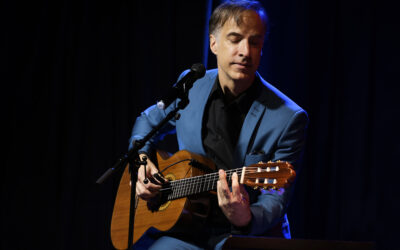
Ramsay Rawson’s version closes Paris Bossa Nova, Volume 1 as its second unreleased chapter — a direct link back to the same Rio de Janeiro creative circle that also produced “La Danse d’Orphée,” closing the EP’s arc where it started: a French guitarist’s dialogue with 1950s and ’60s Rio.
FAQ
Who wrote Eu Sei Que Vou Te Amar?
Antônio Carlos Jobim (music) and Vinicius de Moraes (lyrics), born from their 1956 collaboration on the play “Orfeu da Conceição.”
How is it connected to Black Orpheus?
Both trace back to the same source: Vinicius de Moraes’s 1956 play “Orfeu da Conceição,” later adapted into the 1959 film Black Orpheus.
Is there a new version of Eu Sei Que Vou Te Amar?
Yes — Ramsay Rawson recorded his own version for 2026, Chapter 5 of his debut EP Paris Bossa Nova, Volume 1.
Stream Eu Sei Que Vou Te Amar on Spotify · Follow Ramsay Rawson · Paris Bossa Nova playlist
The rest of the series
Paris Bossa Nova, Volume 1: The History Behind Every Chapter · Samba Saravah · Le Rendez-vous · La Danse d’Orphée · J’attendrai