
The Four Freedoms is a suite in four movements by the French-American pianist and composer Christopher Culpo, commissioned by the Albany-Berkshire Ballet of New York. Composed and recorded in Paris in 2017 by the Succi Culpo Ensemble, the album was released on 2 October 2020 on Bandcamp.
Rockwell, Roosevelt and the music
The music is based on the paintings of the American artist Norman Rockwell, who was himself inspired by President Franklin D. Roosevelt’s 1941 State of the Union address. In that speech Roosevelt criticized American isolationism while setting out an American response to totalitarian aggression against democracy.
Roosevelt argued for circumventing the neutrality laws that banned arms sales to countries at war, in order to help the allies already engaged in the conflict; the address marks the end of the American tradition of non-interventionism. But while the first half of the speech advocated American intervention abroad, Roosevelt went much further on the state of democracy in the United States.
Reading Roosevelt’s words, I am struck by how relevant what he says is, and by how what he puts forward as “simple, basic things” would be called extremist, socialist, and therefore un-American and dangerous in the social and political situation we are living through in the United States today.
Christopher Culpo
The four paintings
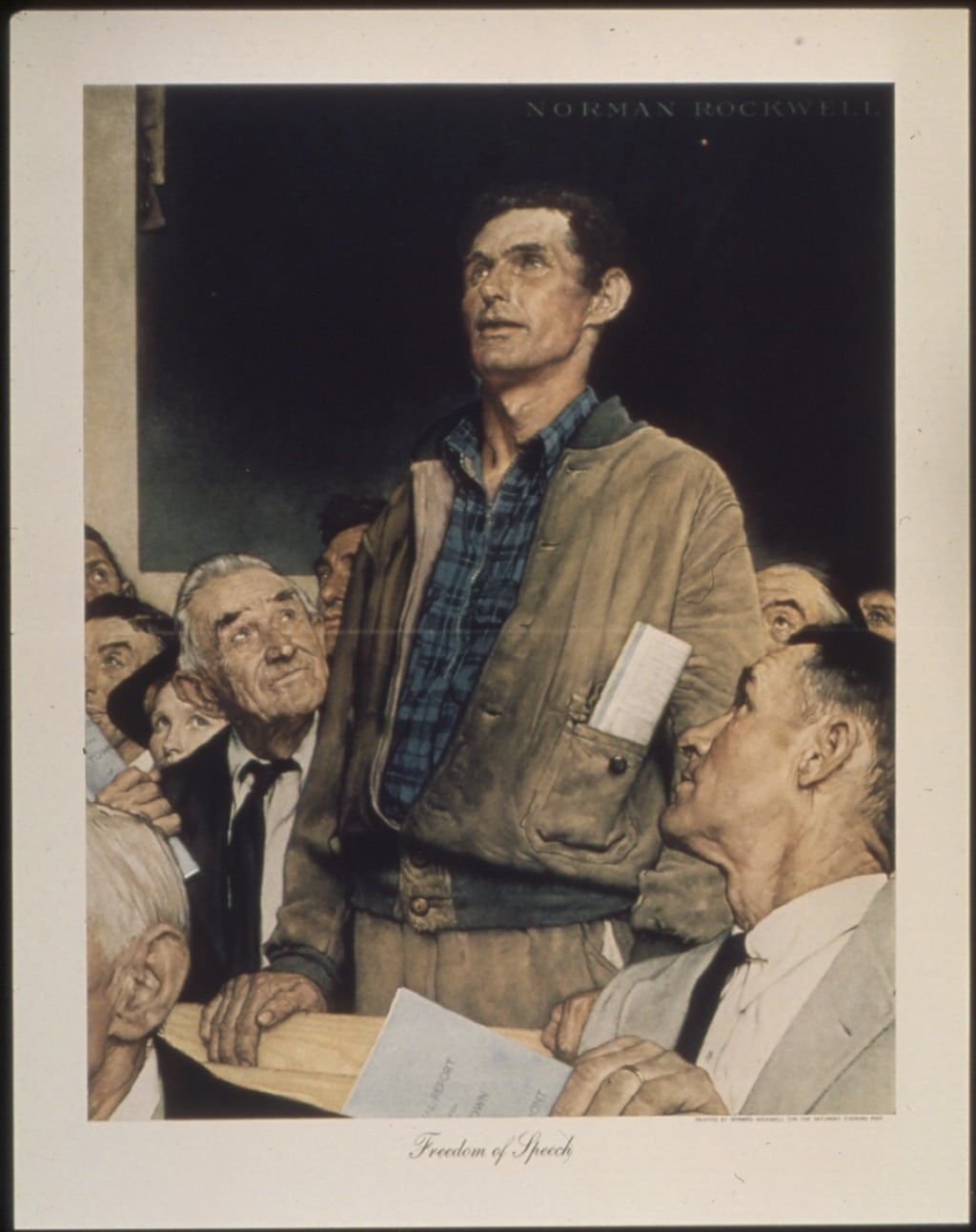
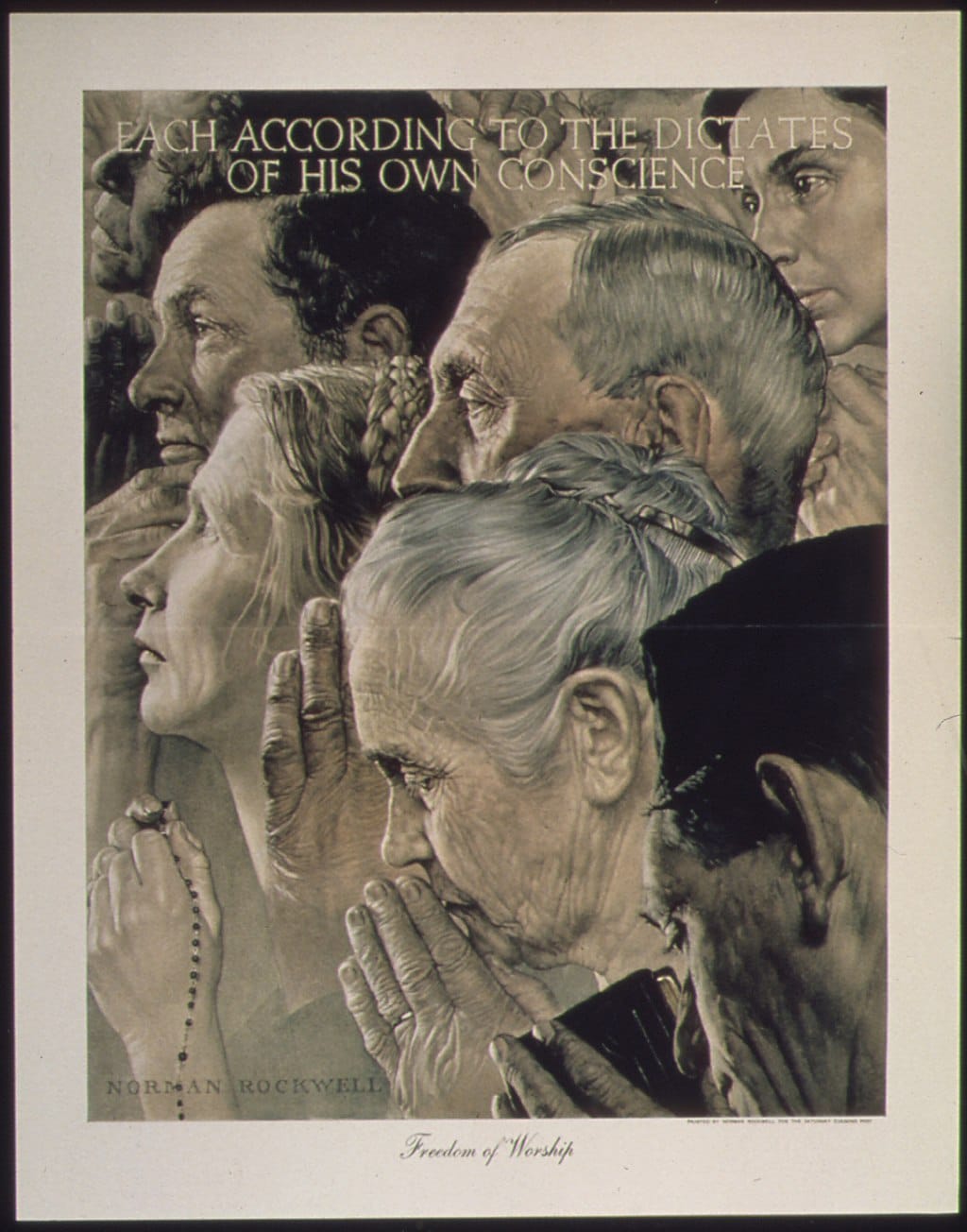
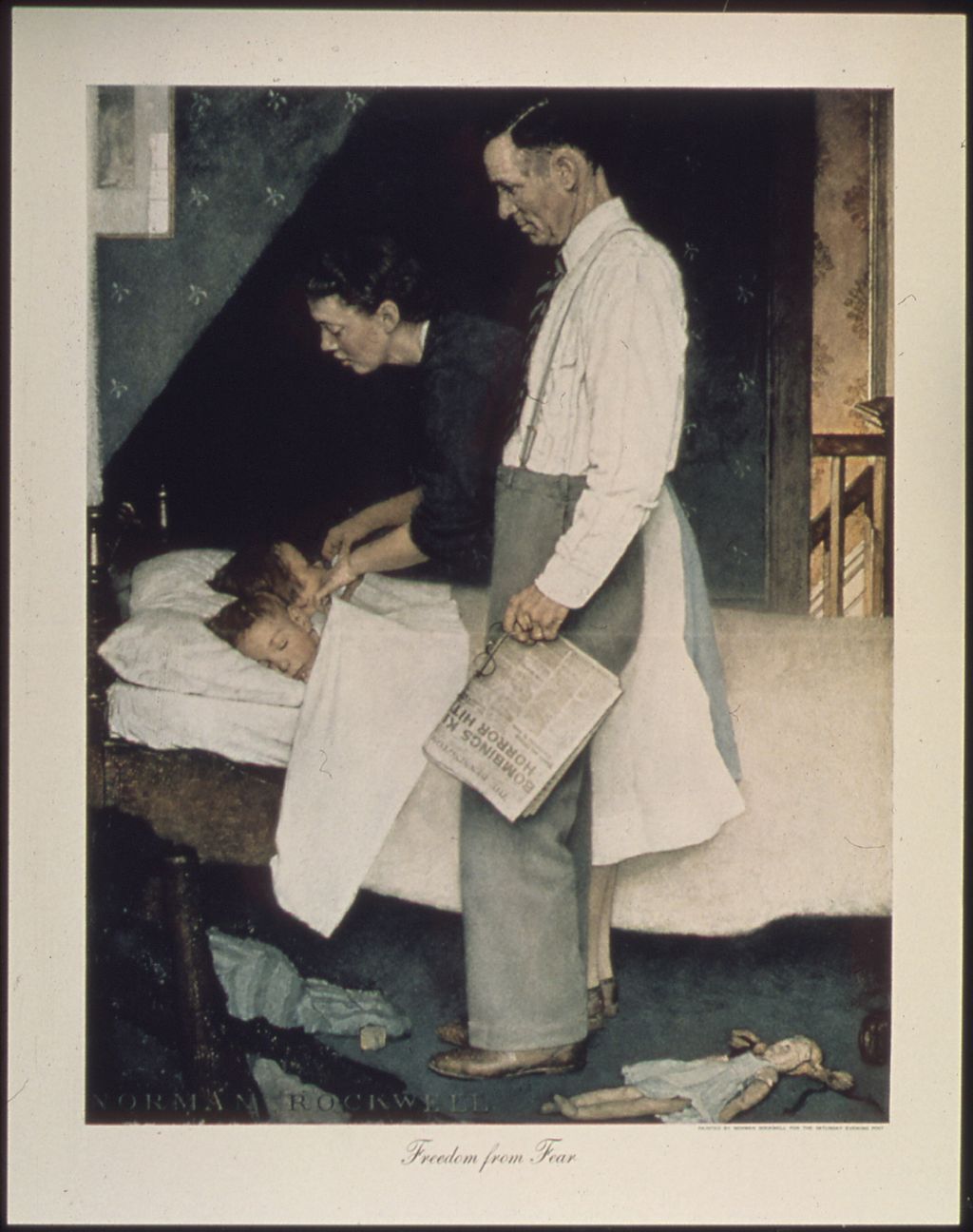
Rockwell painted the four pictures for the Saturday Evening Post; they were first published in 1943, as part of an effort to explain to Americans the country’s participation in the Second World War.

The speech behind the suite
Before naming the four freedoms, Roosevelt said:
Certainly this is no time for any of us to stop thinking about the social and economic problems which are the root cause of the social revolution which is today a supreme factor in the world.
For there is nothing mysterious about the foundations of a healthy and strong democracy. The basic things expected by our people of their political and economic systems are simple. They are: equality of opportunity for youth and for others; jobs for those who can work; security for those who need it; the ending of special privilege for the few; the preservation of civil liberties for all; the enjoyment of the fruits of scientific progress in a wider and constantly rising standard of living.
These are the simple, basic things that must never be lost sight of in the turmoil and unbelievable complexity of our modern world. The inner and abiding strength of our economic and political systems is dependent upon the degree to which they fulfill these expectations.
Many subjects connected with our social economy call for immediate improvement. As examples: we should bring more citizens under the coverage of old-age pensions and unemployment insurance; we should widen the opportunities for adequate medical care; we should plan a better system by which persons deserving or needing gainful employment may obtain it.
Franklin D. Roosevelt, State of the Union, 6 January 1941
Then he set out the four freedoms:
In the future days, which we seek to make secure, we look forward to a world founded upon four essential human freedoms.
The first is freedom of speech and expression, everywhere in the world.
The second is freedom of every person to worship God in his own way, everywhere in the world.
The third is freedom from want, which, translated into world terms, means economic understandings which will secure to every nation a healthy peacetime life for its inhabitants, everywhere in the world.
The fourth is freedom from fear, which, translated into world terms, means a world-wide reduction of armaments to such a point and in such a thorough fashion that no nation will be in a position to commit an act of physical aggression against any neighbor, anywhere in the world.
That is no vision of a distant millennium. It is a definite basis for a kind of world attainable in our own time and generation.
Franklin D. Roosevelt
Key facts
Recorded · Paris, 2017
Commission · Albany-Berkshire Ballet, New York
Release · 2 October 2020, Bandcamp · Listen on Bandcamp
Read also · Christopher Culpo, our work · Sikora Culpo Duo, Speaking in Tongues